
How to apply for Citizenship By Descent
What is Citizenship By Descent (Ancestry)?
Citizenship by descent – also called citizenship by ancestry or jus sanguinis – lets you potentially claim a new nationality and passport through your parents, grandparents, or sometimes great‑grandparents, without going through a full immigration route.
This means, it is not necessary to go through the standard process of naturalization, which involves residing in a country for 5-15 years before a prospective applicant is eligible to apply for citizenship by residency/naturalization.
In most cases, eligible applicants who plan to apply for citizenship by descent do not need to learn the native language and/or pass a history test, making it substantially easier to acquire a new citizenship.
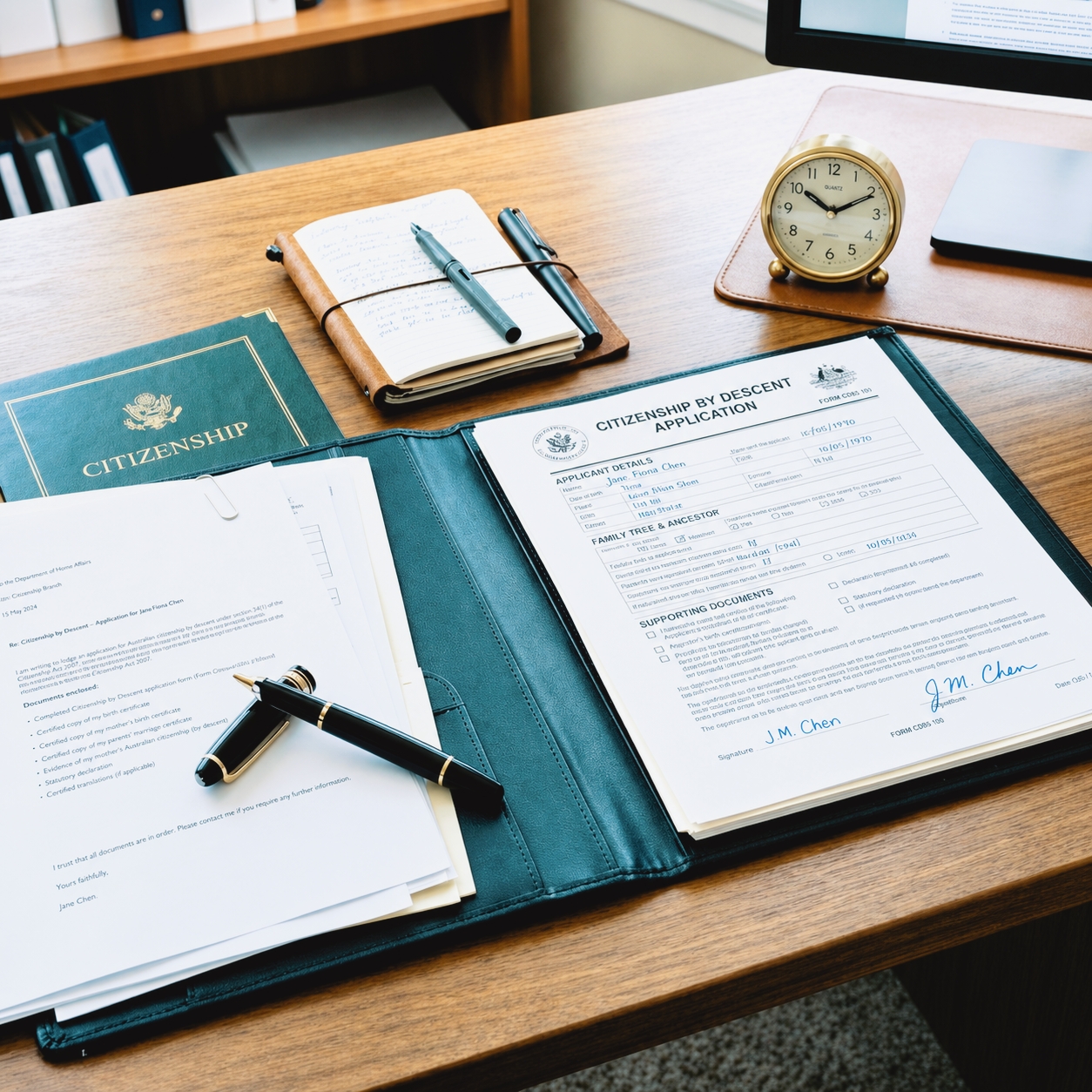
Why Apply for Citizenship By Descent
Citizenship by descent is a legal pathway where you obtain nationality because you are descended from a citizen, regardless of where you were born.
Many countries in Europe, the Americas, and beyond allow foreign‑born descendants of their citizens to reclaim or confirm citizenship, often leading to dual nationality, visa‑free travel, and long‑term relocation options.
For many applicants, citizenship by descent is a strategic way to unlock a second passport, reconnect with family roots, and build a long‑term “Plan B” for themselves and their children.
It can offer significant advantages such as easier work and residence rights, access to education and healthcare, and broader global mobility compared with standard visas.
While there are many benefits of applying for citizenship by descent, the key advantages that most applicants find useful are:
Dual citizenship and an additional passport
Freedom to live, work, or study in the country*
The ability to pass citizenship on to future generations
Potential tax planning/lifestyle flexibility, depending on local laws
*And, in the EU, being able to reside and work across multiple member states
Who is eligible for citizenship by descent?
Every country has its own rules, but most citizenship by descent programs follow similar principles.
In general, you may qualify if:
You have a parent, grandparent, or sometimes great‑grandparent who was a citizen/ long term resident of the country.
Certain freezones require mandatory annual audit reports while others do not.
You can prove an unbroken line of descent with official records (birth, marriage, and sometimes naturalization documents).
You meet any extra country‑specific rules, such as:
– Generational limits (for example, only through parents or grandparents).
– Special dates in the law (for example, ancestor had to be a citizen on a certain date).
– Rules about whether citizenship passes through the maternal line, paternal line, or both.
The law regarding citizenship by ancestry (descent) are technical and vary widely, BUH Consulting works with immigration lawyers globally to facilitate the process of applying for citizenship directly for applicants who have all relevant files necessary to claim citizenship by descent.
For applicants that do not have the necessary documentation but believe they are eligible to apply for citizenship by descent, or for those who are interested to find out whether they qualify, BUH Consulting’s documents research and sourcing team can also assist with locating relevant documents of the ancestor.
Our team has experiencing sourcing documents globally for documents dating back approximately, to the year 1850, in different countries.
Note: the time period of which documents are available varies country by country.
Process To Apply for Citizenship By Descent (Ancestry)
Step‑by‑step: how to obtain citizenship by descent
1. Assess your eligibility
The first step is to map your family tree and identify every potential ancestor who might have held the target citizenship.
It is necessary to understand:
- Full names, dates, and places of birth of parents, grandparents, and great‑grandparents.
- Marriage, name changes, or adoptions that could affect the legal line of descent.
After the relevant information has been provided by the applicant, our documents sourcing team will begin to locate the documents.
2. Understanding the country’s citizenship by descent law
After the documents have been sourced, it is necessary to determine whether the ancestor’s documents are suitable for the descendent to apply for citizenship by ancestry.
The most common points to consider for jus sanguinis – citizenship by descent, are:
- How many generations are covered (parents only, parents and grandparents, or further back).
- Whether the law has changed over time and applies differently to you based on your date of birth.
- Any gender or legitimacy rules that may apply to older generations.
- Whether your ancestor’s naturalization abroad broke the chain of citizenship.
3. Gather and prepare documents
Strong documentation is the heart of any successful citizenship by ancestry application.
The most common documents needed to apply for citizenship by descent, but not limited to, are:
- Civil status records: long‑form birth, marriage, and death certificates for each generation linking you to the ancestor.
- Proof of ancestor’s citizenship: home‑country birth certificate, passport, citizenship certificate, or naturalization records.
- Immigration and naturalization records in other countries, where relevant.
- Name change or adoption records to explain any differences in names or spellings.
- Certified translations into the required language, plus apostilles or legalizations where needed.
4. Prepare and submit your application
Once the relevant documents have been located and eligibility status is confirmed, it is time to submit a citizenship claim to the respective country’s relevant authority.
BUH Consulting will assist with:
- Completing official citizenship by descent application forms.
- Attaching all required supporting documents in the correct order and format.
- Arranging and attending an interview or in‑person submission where the officer reviews your file and may ask about your family history and documentation.
- If necessary, a local lawyer will be assigned to assist with the process.
5. Wait for a decision and finalize your status
Processing times vary dramatically—from a few months to several years—depending on the country and complexity of your case.
During this stage:
- Authorities verify your lineage and check that there is no break in the chain of citizenship.
- They may request additional documents or clarifications (for example, a missing certificate).
- Once approved, you are either confirmed as a citizen from birth (by descent) or granted citizenship based on your ancestry.
After approval, the new citizen will be required to:
- Register with local civil authorities if you plan to move or exercise full rights in that country.
- Obtain a formal proof of citizenship or registration certificate.
- Apply for your first passport.
Common Challenges for Citizenship By Descent
Even straightforward ancestry cases can run into issues that delay or derail an application, the most common challenges include:
Complex family histories: Divorces, adoptions, multiple marriages, and international moves can all affect eligibility.
• BUH Consulting can provide a tailored legal analysis helps map out a clean, documented chain from you to the qualifying ancestor.
Missing or destroyed records: Older documents can be incomplete, lost, or recorded under different spellings.
• BUH Consulting’s document recovery team have access to alternative archives and strategies to prove lineage when records are hard to obtain.
Name and date inconsistencies: Small discrepancies between documents can raise questions about identity or continuity of the bloodline.
• Our team of legal experts can prepare affidavits or supporting evidence to reconcile these differences.
Historical law changes: Citizenship laws change over time, and an ancestor’s status in the past may not be obvious from today’s rules.
• BUH Consulting’s citizenship by descent team can aid in interpreting historical laws and show how they apply to your family.